Plot maps with R

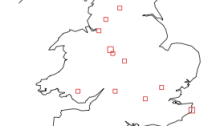
Another thing I have learned to do while at HSPH is to make maps with a nice sprinkling of visual sugar e.g. proportional point sizes, different colours, different shapes. This post will take you through that. Thanks to Amy Wesolowski at HSPH for teaching me how to do this! The commands below can also be downloaded…
Annotating phylogenetic trees

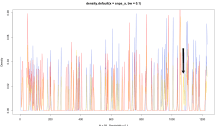
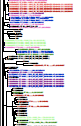
Once your phylogenetic tree gets above 50-100 strains it can become a bit unwieldy to analyse. One nice way of getting around this is to annotate your tree with relevant info e.g. serotype, phage type, source, date, location etc. A while ago, Tim wrote a script to annotate NEXUS format trees for viewing in e.g.…

Assessment of assembly

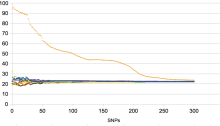
We, like many people, are interested in optimal de novo genome assembly. When you assemble a genome you want the best possible representation of the ‘true’ genome. How can we obtain the best possible representation? In the past we have used VelvetOptimiser to do our assemblies. This assembles with a range of k-mers and returns…

Thoughts on SGM – phage therapy

This week’s post is by Lauren Cowley, a PhD student in our lab studying the phage typing of E. coli O157. She was at SGM in Manchester last week and kindly agreed to write a blog post on one of the topics which made an impression on her; phage therapy…   Having just returned from…

A bacteriophage encodes it’s own CRISPR

Just thought I would just do a quick post on a really interesting paper, ‘A bacteriophage encodes its own CRISPR/Cas adaptive response to evade host innate immunity’. Briefly summarised below… Vibrio cholera is in a dynamic relationship with phage – walking a tight rope between increasing phage resistance and decreasing virulence. There is an evolutionary…

Hello world!

Hello! This blog is going to have a three main aspects: Interesting bioinformatics titbits e.g. what is the impact of k-mer correction (e.g. Musket) compared to quality filtering in terms of mapping and assembly statistics. Preliminary results from our project – the use of whole genome sequencing for typing of E. coli O157:H7. Noteworthy papers…